Why does tire balance matter?
Tire balance matters because even a small weight difference around a spinning tire can create vibration, uneven tread wear, and extra stress on steering and suspension parts. When a tire and wheel assembly is balanced correctly, it rotates more evenly, which helps the vehicle ride smoother and gives the tread a better chance to wear consistently.
That may sound minor until you feel the difference at highway speed. A tire that is slightly off balance may seem acceptable around town, then shake the steering wheel, seat, or floorboard once you get on the interstate. Over time, that repeated vibration can make driving uncomfortable and may contribute to faster wear on tires and related components.
A proper tire balance can help with:
- Ride comfort: Less shaking through the steering wheel, seat, or cabin.
- Tire longevity: More even contact with the road helps reduce irregular wear patterns.
- Vehicle control: Smoother rotation supports steadier handling, especially at higher speeds.
- Protection for other parts: Reducing vibration can ease strain on steering and suspension components.
- Confidence on longer drives: A balanced set of tires simply makes the vehicle feel more settled.
The basic idea behind wheel balancing in automobile service
Wheel balancing in automobile maintenance is the process of finding heavy or light spots in the tire and wheel assembly, then correcting them with small weights. Tires, wheels, valve stems, and repair materials are not always perfectly uniform. Once they spin together, those tiny differences can become noticeable.
Think of a ceiling fan with one blade slightly heavier than the others. At low speed, you may barely notice it. At high speed, the wobble becomes obvious. Tires work in a similar way, except the tire is carrying the weight of the vehicle and turning thousands of times during a normal drive.
Balancing a tire does not change the tire’s position on the vehicle, and it does not adjust the direction the wheels point. It focuses on the rotating assembly itself. That is why tire balance is often handled during new tire installation, flat repairs, seasonal tire changes, or routine maintenance visits.
How does balancing tires work?
Balancing tires works by spinning each mounted tire and wheel on a balancing machine, measuring where the assembly is uneven, and adding precise weights to correct the imbalance. A technician then rechecks the wheel to confirm the correction before it goes back on the vehicle.
The process typically includes these steps:
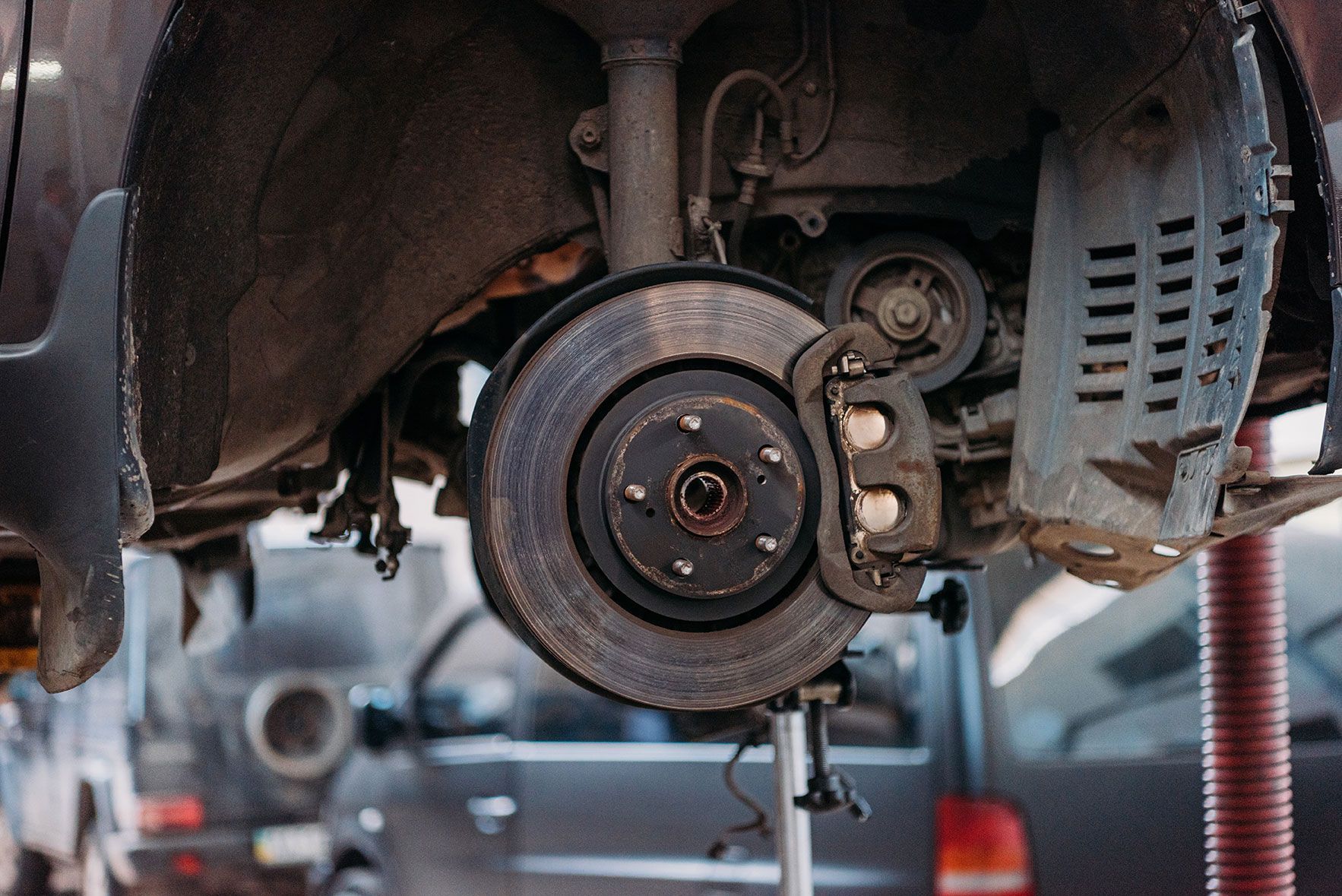
- The wheel is removed from the vehicle. The technician takes off the tire and wheel assembly so it can be measured separately.
- The assembly is mounted on a balancer. Accurate mounting matters. If the wheel is not centered correctly on the machine, the reading may not reflect how it rolls on the vehicle.
- The machine spins the wheel. Sensors measure imbalance and identify where weight needs to be added.
- Weights are applied. Depending on the wheel type, the technician may use clip-on weights, adhesive weights, or a combination suited to the wheel design.
- The wheel is spun again. A final check confirms whether the tire balance is within the needed range.
- The wheel is reinstalled and torqued properly. Correct installation helps prevent vibration, wheel damage, and safety concerns.
Modern balancing equipment can make the process more precise with features such as automatic measurement, laser-guided weight placement, and improved centering tools. Still, the technician’s setup and attention to detail are just as important as the machine. Clean wheel surfaces, correct adapters, and proper weight placement all affect the final result.
Common signs your tires may be out of balance
Unbalanced tires often announce themselves through vibration, but the location and speed of that vibration can give you clues. A shake that appears mainly at highway speeds is one of the most common reasons drivers schedule balancing. If the vibration grows stronger as speed increases, tire balance should be checked.
Watch for these signs:
- Steering wheel vibration: Often linked to a front tire or wheel issue.
- Seat or floor vibration: May point toward rear tire imbalance, though a full inspection is still needed.
- Uneven or cupped tread wear: Irregular patches can develop when the tire does not roll smoothly.
- A humming or rhythmic road feel: Some drivers notice a repeated pulse rather than a sharp shake.
- New vibration after tire work: If a tire repair, rotation, or new installation is followed by shaking, balance should be verified.
Not every vibration is caused by balancing. Bent wheels, damaged tires, worn suspension parts, brake issues, alignment problems, or missing hub-centric rings on some aftermarket wheels can create similar symptoms. That is why a professional inspection is useful. The goal is not just to add weights, but to find the reason the vehicle feels wrong.
Tire rotation vs balancing
Tire rotation vs
balancing is a common point of confusion because the services are often done around the same time. Rotation changes where the tires sit on the vehicle, while balancing corrects how each tire and wheel assembly spins.
A tire rotation service moves tires from one position to another according to the vehicle’s recommended pattern. This helps even out tread wear because front and rear tires experience different loads, steering forces, and braking conditions. Balancing, on the other hand, does not decide which tire goes where. It corrects weight distribution in each assembly.
Here is the practical difference:
- Rotation answers: “Are my tires wearing evenly from position to position?”
- Balancing answers: “Does each tire and wheel spin smoothly?”
- Alignment answers: “Are my wheels pointed at the correct angles?”
Many drivers choose to have balance tires checked during routine rotation intervals, especially if they drive frequently on highways around Jackson MS, commute between nearby cities, or notice vibration. Pairing a tire rotation service with a balance check can be a convenient way to protect ride quality and tread life in one visit.
When to schedule tire balancing
A good rule of thumb is to consider balancing whenever tires are installed, repaired, rotated, or whenever vibration appears. Many drivers combine balancing with rotation about every 5,000 to 6,000 miles, but your vehicle, tire type, road conditions, and driving habits can change what makes sense.
You should schedule tire balancing when:
- A tire has been patched or repaired.
- You feel vibration at certain speeds.
- You notice cupping, scalloping, or uneven tread wear.
- A wheel weight has fallen off.
- You hit a pothole or curb and the ride changes afterward.
- You are preparing for a long road trip and want a smoother drive.
- You recently installed aftermarket wheels.
Drivers in Clinton MS, Pearl MS, Madison MS, and Jackson MS deal with everyday stop-and-go traffic, highway driving, weather changes, and road hazards that can all affect tires over time. If your vehicle suddenly feels less smooth than it used to, waiting rarely helps. A quick balance check can determine whether the fix is simple or whether another issue needs attention.
What professionals look for beyond basic balance
Basic
balancing corrects weight distribution, but experienced technicians also pay attention to the details that can cause repeat vibration. This is especially important for trucks, SUVs, performance vehicles, and vehicles with larger wheels or low-profile tires.
High-performance and ultra-high-performance tires can be more sensitive to small imperfections. A slight centering issue on the balancer or a minor wheel concern may be felt clearly through the cabin. That is why proper tooling, clean mounting surfaces, and careful weight placement matter.
A professional may also consider:
- Wheel condition: Bent, cracked, or corroded wheels may not balance correctly.
- Tire condition: Internal tire damage, separated belts, or irregular wear can mimic imbalance.
- Rim runout: A wheel that is not perfectly round can cause vibration even after weights are applied.
- Radial force variation: Some tires may have stiff spots that create a road-force type vibration.
- Tire seating: The tire must sit correctly on the rim.
- Hub fitment: Aftermarket wheels may need proper hub-centric rings to center on the vehicle.
If a vehicle still vibrates after balancing, that does not always mean the balancing was ignored. It may mean the original symptom has another cause. A good shop will keep diagnosing rather than repeatedly adding weight to a wheel that has a separate mechanical or tire-related problem.
Simple checks drivers can do before an appointment
You do not need special tools to notice early clues. Before scheduling service, take a short mental note of when the vibration happens, where you feel it, and whether anything changed recently. This helps the technician narrow down the cause faster.
Try this quick checklist:
- Notice the speed range. Does the shake appear around town, only on the highway, or at a specific speed?
- Identify where you feel it. Steering wheel vibration, seat vibration, and floorboard vibration can point in different directions.
- Look at the tread. Uneven patches, cupping, or one tire wearing differently from the others deserve attention.
- Check for missing weights. On some wheels, you may see a clean spot where an adhesive weight used to be.
- Think about recent events. New tires, a flat repair, pothole impact, or rotation can all be relevant.
- Avoid guessing too long. If vibration is strong, worsening, or paired with pulling, noise, or visible tire damage, schedule service promptly.
These checks do not replace a professional inspection, but they make the conversation more productive. Instead of saying “my car shakes,” you can explain that the steering wheel starts vibrating at highway speed after a recent tire repair, which is much more useful.
Local maintenance habits that help tires last
Tire care works best as a routine, not a reaction to problems. Regular inflation checks, tread inspections, rotation, and balancing all support each other. If one part of that routine is ignored, the others may not deliver their full benefit.
For example, balancing a tire will not fix low inflation. Rotation will not correct a bent wheel. Alignment will not remove a heavy spot in a tire and wheel assembly. Each service handles a different part of the tire wear and ride-quality picture.
A practical local maintenance plan might include:
- Check tire pressure at least monthly and before long trips.
- Inspect tread for uneven wear during oil changes or wash days.
- Schedule tire rotation service at the mileage interval recommended for your vehicle and tires.
- Ask for tire balance checks if you feel vibration or see irregular wear.
- Have alignment checked if the vehicle pulls, the steering wheel is off-center, or tires wear heavily on one edge.
- Visit a trusted tire professional when road impacts or repairs change how the vehicle feels.
Big 10 Tire Pros can help drivers in and around Clinton MS, Jackson MS, Pearl MS, and Madison MS make sense of these services without turning tire care into guesswork. The right schedule depends on your vehicle, your driving, and the condition of your tires.
A smoother ride starts with the right correction
Balancing is one of those maintenance services you may not think about until something feels off. Once the vibration starts, though, it can affect comfort, confidence, and tire wear every time you drive. Understanding how tire balance works also helps you avoid confusing it with rotation or alignment.
If your steering wheel shakes, your ride feels rough at speed, or your tires are wearing unevenly, do not ignore the signs. Have a professional inspect the tires, wheels, and related components, then balance tires when needed. A careful balance today can help your vehicle feel calmer, smoother, and better prepared for the miles ahead.